
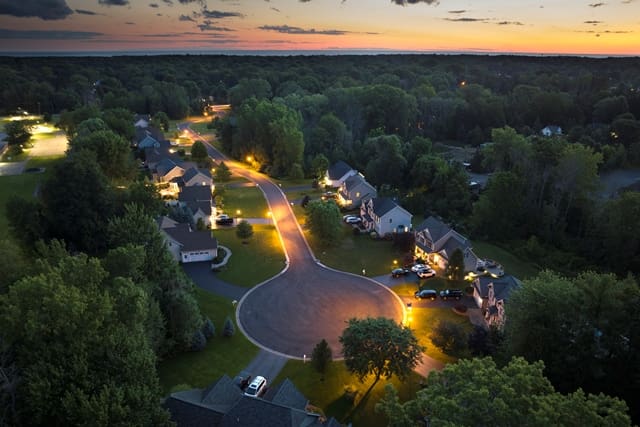
When buyers evaluate a neighborhood, they often focus on home prices, schools, commute times, and nearby amenities, but streetlights can provide another useful clue about the character of an area. Adequate outdoor lighting can improve visibility for drivers, pedestrians, cyclists, and residents returning home after dark. While streetlights alone cannot determine whether a neighborhood is safe, their placement, condition, brightness, and coverage can reveal how a community approaches public infrastructure and nighttime visibility. Buyers who tour properties during daylight hours may overlook conditions that become much more noticeable after sunset. For real estate agents, encouraging clients to consider neighborhood lighting can add another practical dimension to the home-buying process.
Consistent Street Lighting Can Improve Visibility
One of the most obvious things streetlights can tell buyers is whether a neighborhood has consistent nighttime visibility. Streets with well-spaced lights can make intersections, sidewalks, driveways, parked vehicles, and pedestrians easier to see after dark. Better visibility may also help residents feel more comfortable walking their dogs, getting the mail, or traveling between their vehicles and homes at night. Buyers should pay attention to whether lighting extends throughout the neighborhood or becomes noticeably weaker on certain streets. Consistent illumination does not guarantee neighborhood safety, but it can be an important part of evaluating the overall environment.
The Condition of Streetlights Can Tell a Story
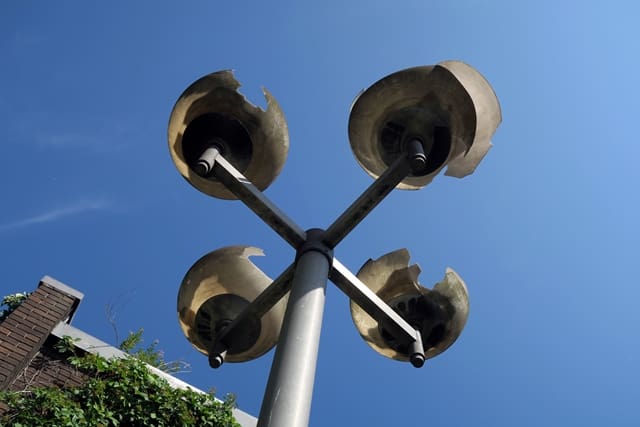
The physical condition of streetlights can also provide insight into how well public infrastructure is maintained. Buyers may notice broken fixtures, flickering bulbs, damaged poles, overgrown vegetation blocking lights, or lights that appear to have been out for an extended period. A single malfunctioning light does not necessarily indicate a broader problem, because maintenance issues can occur in even well-maintained communities. Multiple neglected fixtures, however, may encourage buyers to research how quickly the local government, utility provider, homeowners association, or other responsible organization addresses infrastructure concerns. Looking at streetlight maintenance alongside roads, sidewalks, signage, landscaping, and other public amenities can provide a broader picture of neighborhood upkeep.
Dark Spots May Reveal Infrastructure Gaps
Dark areas between streetlights can be worth investigating, particularly around intersections, sidewalks, pedestrian crossings, parks, and neighborhood entrances. A poorly illuminated location may simply reflect older infrastructure, mature landscaping, low-density development, or a lighting design that has not been updated. However, persistent gaps in lighting can affect how comfortable people feel navigating the area after sunset. Buyers should look beyond the immediate property and examine the surrounding streets, parking areas, pathways, and common spaces. Real estate agents can help clients identify these conditions without making unsupported assumptions about crime or neighborhood safety.
Brightness and Glare Both Deserve Attention
More lighting is not automatically better lighting, because excessive brightness or glare can create its own problems. Lights that shine directly into bedroom windows may affect sleep and become an unwanted feature for homeowners. Extremely bright fixtures can also create glare that makes it harder for drivers or pedestrians to see clearly in certain conditions. Buyers should consider whether lighting provides useful illumination without creating excessive contrast between brightly lit and completely dark areas. Visiting a prospective neighborhood at different times of day can help buyers determine whether the lighting feels practical, comfortable, and appropriately distributed.
Streetlights Can Affect Walkability and Curb Appeal

Street lighting can contribute to a neighborhood’s walkability and the way properties appear after sunset. Well-lit sidewalks and streets may make evening walks, neighborhood gatherings, and outdoor activities more inviting for residents. Lighting can also improve the visibility of landscaping, architectural features, entrances, and community amenities, potentially contributing to a neighborhood’s overall curb appeal. For buyers who value an active evening lifestyle, lighting may be especially important when comparing otherwise similar properties. Agents can encourage clients to evaluate not only how a neighborhood looks during a daytime showing but also how it functions and feels after dark.
Smart Buyers Should Look Beyond Streetlights
Although streetlights can provide useful clues, they should never be treated as a standalone measurement of neighborhood safety. Buyers should consider lighting alongside crime statistics, traffic patterns, pedestrian activity, sidewalk conditions, local development, emergency services, and other relevant factors. They can also visit the neighborhood at different times and on different days to develop a more complete understanding of the area. Talking with local residents may provide additional perspective about lighting outages, evening activity, and how the neighborhood changes after sunset. The goal is to gather multiple sources of information rather than drawing conclusions from a single visual characteristic.
How Real Estate Agents Can Help Buyers Evaluate Neighborhood Safety
Hiring a knowledgeable real estate agent can make the process of evaluating neighborhood conditions more efficient and informed. Experienced agents can help buyers identify factors worth researching, compare surrounding communities, and recognize details that may not be obvious during a standard daytime showing. They can also help clients investigate property-specific concerns while avoiding unsupported claims about crime or safety. An agent familiar with the local market may know which questions buyers should ask about homeowners associations, public improvements, sidewalks, lighting, traffic, and neighborhood development. By incorporating these considerations into the home search, real estate agents can help clients make decisions based on a broader understanding of both the property and its surroundings.
Conclusion: Use Streetlights as One Piece of the Neighborhood Puzzle
Streetlights can offer valuable clues about visibility, infrastructure, walkability, and the overall nighttime environment of a neighborhood. Their condition, placement, brightness, and consistency can help buyers identify factors they might miss during a daytime property tour. At the same time, lighting should never be used by itself to determine whether an area is safe, because neighborhood conditions are influenced by many different factors. Buyers should combine observations about streetlights with research into crime data, traffic, sidewalks, community amenities, and other characteristics that affect everyday living. For real estate agents, discussing these details can help clients evaluate neighborhoods more thoughtfully and understand that sometimes the smallest infrastructure features can provide surprisingly useful information.
#RealEstate #NeighborhoodSafety #HomeBuyingTips #RealEstateAgents #NeighborhoodEvaluation #HomeBuyers #StreetLighting #Walkability #RealEstateMarketing #PropertySearch

For a copy of our home buying process, please fill out the form on this page. The guide will be emailed immediately.
If you are looking for assistance in the metro Atlanta area, please reach out to us. We would love the opportunity to help you with your home purchase or sale.
If you are in another part of the country, we may be able to refer you to an agent in your market.
